Best AI Apps for Organic Chemistry in 2026
Organic chemistry has a reputation and it earned every bit of it. Curved arrows, stereochemistry, seventeen ways to draw the same molecule, and a professor who says "just visualize it" like that is a plan.
Here is the twist. Orgo is not really a memorization class. It is a pattern recognition class, and pattern recognition is exactly what a good quiz loop trains. The students who survive it are not smarter than you. They just drilled the right questions enough times that the mechanisms started to look obvious.
These are the AI apps in 2026 that make that drilling fast, so you spend your nights understanding reactions instead of re-reading the same chapter five times.
Why Orgo Breaks Every Normal Study Method
Highlighting does nothing here. Re-reading does even less. Orgo punishes passive review because the exam does not ask you to recognize a fact, it asks you to predict what happens next when an electron moves. That is a skill, and skills come from repetition, not from staring.
So the winning setup is a loop: see a mechanism, get quizzed on it before you feel ready, get it wrong, understand why, see it again three days later. Active recall plus spaced repetition is the whole game. Anything that makes that loop faster, and prettier to look at, is worth keeping, and visual study-notes that map a reaction onto a clean diagram will beat a wall of highlighted text every single time.
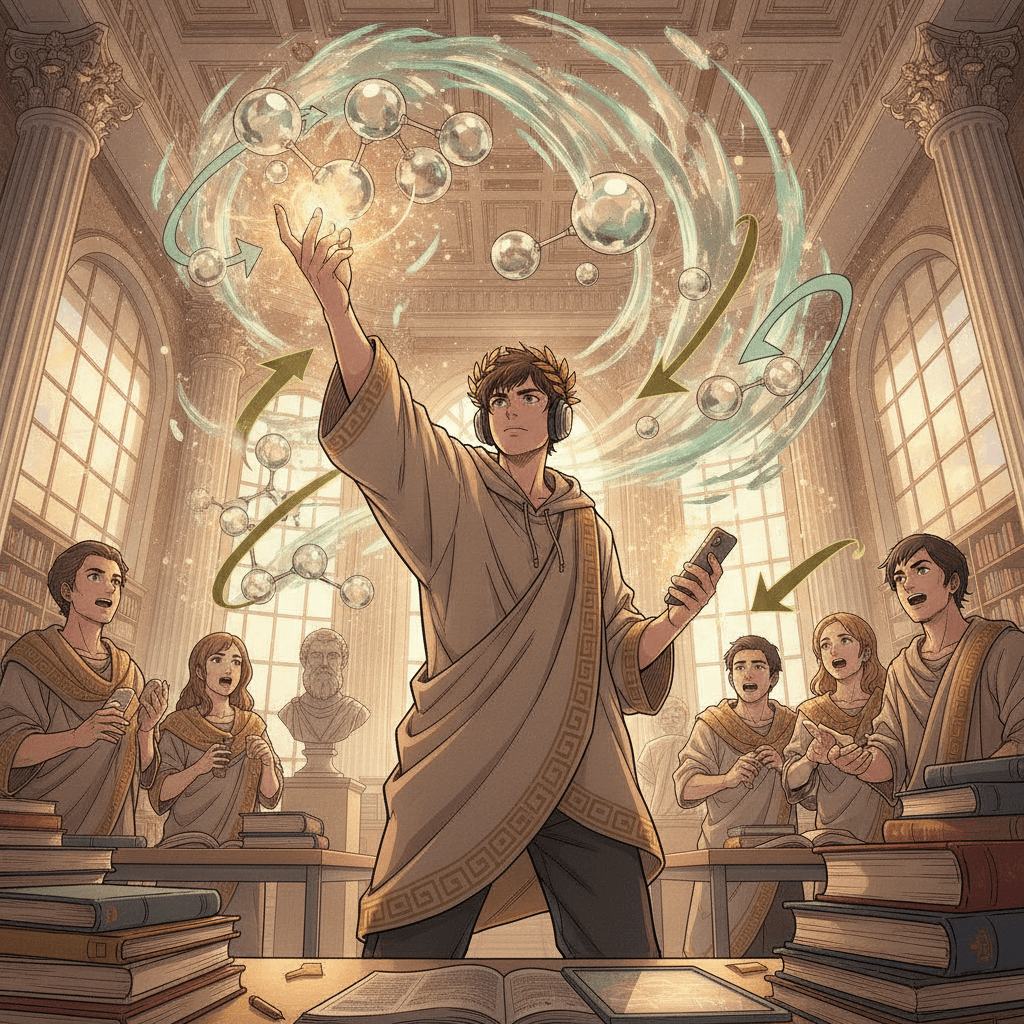
Best AI Apps for Organic Chemistry in 2026
1. Aistote: the fastest way to turn orgo notes into practice
Aistote has been around since 2023, it is used by 500,000+ students, and it was built for exactly this problem. Drop in a lecture PDF, your own notes, a slide deck, a YouTube explainer, or a recording of the lecture itself, and it generates targeted quizzes and rich visual study-notes in seconds. For orgo that means you can turn a whole lecture on nucleophilic substitution into a drill you can actually fail and learn from.
The spaced repetition engine brings the reactions you keep fumbling back at the right moment, and the gamification layer of streaks, XP, leagues and tournaments keeps you opening the app on the days you would rather not. It runs on iOS, Android, macOS, Windows and Web with real time sync, so a study session on your laptop carries straight over to your phone. Freemium, so you can start free and upgrade when orgo gets heavy.
2. Anki
Anki is the classic for a reason, and if you are already comfortable building decks, its spaced repetition is rock solid. The trade off is time. Building a good mechanism deck by hand takes hours you could have spent actually quizzing yourself, and the interface still feels like a 2010 science project.
3. Quizlet
Quizlet is easy to start and the shared library means someone has probably already uploaded a reaction set for your textbook. The downside is depth. Match and Learn modes work for definitions, but they do not train you to predict a mechanism under time pressure the way a real orgo exam will.
4. StudyFetch
StudyFetch will happily chew through your lecture material and hand back explanations and quizzes, which is genuinely useful when a mechanism video makes zero sense. The catch is that the competitive and habit building side is limited, so nothing is pulling you back once the initial curiosity fades.
5. Revisely
Revisely shines at turning your notes into clean, colour coded study-notes, which for a visual subject like orgo is a real upside. Where it thins out is the quiz loop. You get a nice summary, but you do not get the relentless question pressure that actually cements a reaction pathway.
Why Spaced Repetition Beats Rote Memorization for Reaction Mechanisms
You can memorize one reaction. You cannot brute force a hundred of them, not with a normal human brain and a normal sleep schedule. What you can do is learn the handful of patterns that generate the rest, and spaced repetition is what makes those patterns stick.
Every time an app resurfaces a mechanism right before you would have forgotten it, it is quietly moving that reaction from "I saw it once" to "I know it cold." Do that for a semester and the exam starts feeling like a review instead of a rescue mission. Spaced repetition is not a shortcut, it is the reason the grind actually pays off.
Turning Lecture Slides Into Reaction Drills With AI
The old workflow was brutal: sit through a lecture, write frantic notes, re-read them, and hope. The new one is faster. Take the slides or the recording, feed them to an app that generates quizzes, and in a couple of minutes you have a set of questions that force recall instead of recognition.
That matters most for the ugly parts of orgo, the stereochemistry flips and the multi step syntheses where one wrong arrow ruins everything. A quiz that calls up a mechanism and makes you choose the next step is worth an hour of highlighting. Pair it with study-notes that sketch each reaction in clean diagrams and you have a loop you can run three times a week without burning out.
Which App Should Carry You Through Orgo?
If you already love building cards, Anki will not let you down. If you just want to dump your notes in and get grilled on them, Aistote is the fastest path from a messy lecture to a reaction drill that sticks, and the streaks and XP are what keep you coming back on the nights you would rather quit. Upload one lecture, answer one quiz, and let it be ugly on the first try. That first ugly attempt is where the learning starts.